搜尋此網誌

2022年7月16日 星期六

有關gaṅgā恆河等字的翻譯


感謝讀者羅盛吉教授來函賜教,關於拙作內梵文gaṅgā等字翻譯問題如下:

1. 『恆河』頁221、頁272(同)

⋯漢語古音如今已是相當成熟的學問,「恆」字對音問題事實上可謂是已解決的:漢語上古音到中古音的演變之故。
今天讀第二聲(陽平)的,在中古音多屬濁聲母,而「ㄏ」的濁音/ɦ/(不是普通的/h/,頭有點彎彎的,見
https://en.wikipedia.org/wiki/Voiced_glottal_fricative
https://en.wikipedia.org/wiki/IPA_pulmonic_consonant_chart_with_audio )
在上古漢語較可能是個類似/g/的/ɣ/音(英語音標無此符,其他語言有,符號取字希臘字母gamma小寫,可見其類似g)。這是之所以 āgama古譯作「阿『含』」,gaṅgā 古譯作「『恆』河」。(另外此二譯之尾-a皆丟失,應屬口語現象,參看
https://en.wikipedia.org/wiki/Schwa_deletion_in_Indo-Aryan_languages
英語亦常有弱音在通行口語事實上消失之例。Interest第二個e在德、法等語中仍須發音,英語則雖保留古寫法卻在口語中不發音了。)玄奘之所以改譯作「殑伽」正是因爲到了中古漢語,這個匣母「恆」的開頭確實已經從/ɣ/飄向/ɦ/,更接近今天的ㄏ。可參考的對比是荷蘭話的g的發音:已經很不像別的語言的g,在我們聽來很像/h/(但其實是/ɦ/,方言差異有的眞變成ㄏ),這顯示了g的音變的一例。具體聲音可參考google小姐。
類似的上古到中古的變化,一個例子是kāśyapa→kāśyap(schwa-deletion)→迦『葉』(注意到「葉」的兩種讀音都是有入聲的:或是iap或是ʃiap,並不能說是ㄧㄝˋ或ㄕㄜˋ這麼單純,楊教授提及「波羅蜜應是譯自巴利文parami」(頁38)亦忽略了「蜜」字其實是個入聲字mit,至於尾音丟失同上schwa-deletion)。漢字「葉」在上古到中古的演變中,一條路線是聲母變成i,另一條是ʃi。有可能「阿『育』王」之所以對應Aśoka(schwa-deletion:口語aśok),也是類似的路徑,但「育」字的特殊古讀甚至在今天各漢語(包括臺語)都不曾存留,例如臺語已經是iok了,並沒有siok的讀法,所以玄奘也批評古譯,改譯作「阿輸迦」(《大唐西域記》卷8「唐言無憂,舊曰阿育,訛也」),但偏偏中國人存古心態,古譯就是比玄奘的新譯更通行。


2.頗字
頁119。「頗」是個相當麻煩的問題,參看
https://mp.weixin.qq.com/s/gUvFw-b30Fy0TWLLpULlJA
這是語言演變的麻煩問題。大致上能從文脈肯定的是,「頗有少法」已如楊教授對比梵英所得出的,它就是kacit「is there any (dharma)」在此並不指多而是類似some或any的感覺。

另有打字訛誤均已更正網路版以紅色字顯示:

1. 頁205,【解說】之第三行,『能斷如今剛』(X)→『能斷如金剛
2. 頁403,【解說】之第一行,『不施的對象』(X)→『布施的對象

2021年7月6日 星期二

大般若經 第四會及第五會 品目對比表


唐三藏玄奘法師譯《大般若經‧第四會》、《大般若經‧第五會》宋‧施護譯《佛說佛母出生三法藏般若波羅蜜多經》與上列三本漢譯本、英譯及梵文本對比如下列網址:


八千頌般若經 、頌 梵漢英 品名 序列

 八千頌般若經頌梵漢英品名序列


八千頌般若波羅蜜經 梵漢英 比對

因受一法友說有查尋及引用需要的啟發而動了念,將《八千頌般若波羅蜜經梵漢英比對》


https://8000pp.blogspot.com/


網站的文字花一點時間編為PDF書體檔。若有需要請告知,即寄。請指教!💻🖋🔍


2021年3月13日 星期六

關於「般若佛母」的翻譯


pāramitā (梵文)意為到彼岸或圓滿、完美;巴利文為 parami。譯音波羅蜜應是譯自巴利文parami。英文一般翻譯為 perfection,即完美、圓滿成就之意。漢譯都譯為『到彼岸』,這樣翻譯用以描述抽象名詞,比較難真正令人了解或體會她的意思,如『六度波羅蜜』或『十度波羅蜜』,可以翻譯為『六度圓滿』、『圓滿六度』或『十度圓滿』、『圓滿十度』;prajñāpāramitā 翻譯為『圓滿成就智慧』,更可以完全表達其意,尤其是對不熟悉佛學名詞的人。

梵文與拉丁文、西班牙文、或德文相同,單字有陽、陰、中性之分;pāramitā 波羅蜜多為陰性,故有E. Conze 英譯金剛經加譯修飾為 the lovely Colgate College  the beautiful 美者之譯,用以表現般若為陰性詞。但是根據《大智度論》卷18

「諸佛及菩薩,能利益一切,般若為之母,能出生養育。佛為眾生父,般若能生佛,是則為一切,眾生之祖母。」(大正25190b28-c2)

又《大智度論》卷34

「復次,般若波羅蜜是諸佛母,父母之中母功最重,是故佛以般若為母。」

(大正25314a21-23) 

般若智慧為諸佛之所出,故有云『般若佛母』。因此認為翻譯時若一定要強調 pāramitā 為陰性詞,個人以為用『母』字更能表現般若一詞為陰性的特質,而非加一個 the Lovelythe Beautiful以美麗表顯陰性之特質。

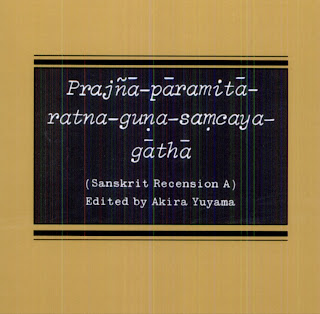
考諸佛經的經名有含「佛母」者,如。《佛母寶德藏般若波羅蜜經》梵文經典名為《prajñāpāramitā ratnaguṇasaṃcaya gāthā》並無「佛母」二字,但是本經(偈)每一品最後一行標名品名時卻都有bhagavatyāṃ 一詞,也就是「佛母」的翻譯。這或許也是十世紀末法賢譯師如此翻譯的因緣,如:

第一品:bhagavatyāṃ ratnaguṇasaṃcayagāthāyāṃ sarvākārajñatācaryāparivarto nāma prathamaḥ ||

第二品:bhagavatyāṃ ratnaguṇasaṃcayagāthāyāṃ śakraparivarto nāma dvitīyaḥ ||


第三十二品:bhagavatyāṃ ratnaguṇasaṃcayagāthāyāṃ parīndanāparivarto nāma dvātriṃśatimaḥ ||

根據 Sanskritdictionary.com 的解釋:f. bhagavatī- m. plural bhagavantaḥ-; or in Nominal verb with 3. sg. of the verb; with Buddhists often prefixed to the titles of their sacred writings (佛教聖典常加此詞),根據漢譯諸譯 (見《金剛經‧詮解篇》)比較,筆者大膽假設這應是出於中、後期或密教興起以後的經典才有的特徵。


2021年3月10日 星期三

Pronunciation of ॐ, OM 唵、嗡 or AUM


How the Sanskrit sign ॐ should be pronounced? 

ॐ is used frequently in meditation or in dharani, which is a sign of combination of three Sanskrit letters, आ A, उ U, and म M. Therefore, by nature, it pronounces as A-U-M. However, it’s been translated into Chinese character as 唵 or 嗡,and pronounces as ‘Om’. Until recent years, some teaching videos on the internet show that the sign ॐ pronounced as ‘A-U-M’ instead of ‘OM‘. Even some yogis teach the sign be pronounced as  ‘A-U-M’ not  ‘OM‘. 

I’m glad to find the comment made by Sautrik Bhattacharya on YouTube shown as below, which I think has the most reasonable explanation. It makes ‘grammatical’ sense at least!

“…you are right. They are three sounds a, u, m but when they are pronounced together then a+u becomes o according to the rules of sandhi of Sanskrit grammar which deals with the mixing of different sounds. It comes under guna svara sandhi. Like hita + upahaar = hitopahaar, gyan + upahaar = gyanopahaar. The rules are based on universal law of flow of words. So Om is the correct pronunciation.”

2021年3月4日 星期四

入不二法門 Entering of the Non-Dualistic Dharma Gate


vimalakīrtinirdeśa


鳩摩羅什大師譯《維摩詰所說經》或玄奘大師譯《説無垢稱經》第九品入不二法門是梵文本第八品,品題在品末 advayadharmamukhapraveśaparivarto ’ṣṭamaḥ || .第八品 入不二法門

—advayadharmamukhapraveśaparivarto

. advaya :(अद्वय) refers to “non-duality”, According to Vajrayāna or Tibetan Buddhism.—The Bodhi mind (bodhicitta) is of the nature of Śūnya and the deity is a manifestation of Śūnya and, therefore, both have the same origin. But to realise that the two are the same requires perfect knowledge. Continuous meditation and austerities enable the worshipper to shed the veil of ignorance which makes one thing appear as two. The Bodhi mind is further called Karuṇā (compassion) and the ultimate reality as Śūnyatā, and when the two commingle, it is called Advaya or non-duality. 不二

. dharma:

. mukha: (मुख) n. mouth, face, entrance, opening, front.

. praveśa: m. entering, entrance, penetration or intrusion into

. parivarto, parivarta: m. revolving, revolution (of a planet etc.) 轉;noun m. a chapter / (Monier-Williams, Sir M. (1988))

’ṣṭamaḥ = aṣṭamaḥ: the eight, 第八


-.-.-.-.-.-.

注:梵文文本第三品品名為 śrāvakabodhisatvavisarjanapraśno nāma tṛtīyaḥ parivartaḥ 弟子菩薩棄答品第三;而三本漢譯本和英譯本皆將此第三品分為<弟子品第三>(梵文本§1-§48, 英譯本 “    3. The Disciples Reluctance to Visit Vimalakīrti”)、<菩薩品第四>(梵文本§49-78, 英譯本”4. The Reluctance of the Bodhisattvas“),所以第四品之後梵文文本與其他譯本品數少一。

śrāvakabodhisatvavisarjanapraśno:

. śrāvaka: m. a disciple of the Buddha 聲聞、佛弟子

. bodhisatva: m. “one whose essence is perfect knowledge”, one who is on the way to the attainment of perfect knowledge. 菩薩

. visarjana: n. answering a question; abandoning, cessation 答、棄、中斷

. praśno, praśna: m. a subject of inquiry, point at issue, controversy, problem, etc.問題、答辯、爭論

nāma: ind. by name, named, called 名

tṛtīyaḥ: n. the third 第三

parivartaḥ: ditto


What is nibbida? 厭離? 嫌膩?


Nibbida的英譯為“utter disgust”, or “disenchanted”, or “in revulsion toward 強烈的反感;厭惡;憎惡”, or “turn away from”?  或漢譯為「厭離」都各有討論。

嫌膩」或是「厭離」nibbida 漢譯另一選擇。

英譯討論:https://www.lionsroar.com/dharma-dictionary-nibbida/

漢譯討論:https://www.facebook.com/groups/491306231038114/permalink/1773202419515149/


2020年10月9日 星期五

聖賢位漢、梵、英譯

 聖賢位漢、梵、英譯

玄奘譯《大般若經》

E.Conze”The Large Sutra of Perfect Wisdom”(複數)

預流/斯陀含srota āpanna

Streamwinner(s)

一來/須陀洹sakṛdāgāmina

Once-Returner(s)

不還/阿那含anāgāmina

Never-Returner(s)

阿羅漢/應果/不來arhat

Arhat(s)

獨覺/Prayekabuddha

Prayekabuddha(s)

菩薩/ Bodhisattva

Bodhisattva(s)

()Tathagata

Tathagata(s)

2020年9月3日 星期四

如來、應、正等覺的英譯

有關「如來、應、正等覺」的英譯,

謹在此補充有關「應」的英譯。書中將「應」譯為”Praiseworthy”不能完全表達全部的意涵。如書中所述,原梵文arhat 漢音譯為阿羅漢,有三義應供清淨無垢、殺賊。又根據《中華佛教百科全書》所示「阿羅漢」條,有多重意義。現了解到為何玄奘大師及幾位譯經大師為何音譯或譯為「應」的原因。 所以「阿羅漢」最恰當的翻譯應該是用音譯arhat,特此補充說明。

-.-.-.-.-.-.-以下取材自拙作《金剛經·詮解篇》十譯比較及新譯註》p.53,54.

〝如來、應、正等覺〞tathāgatenārhatā samyaksaṃbuddhena : = tathāgatena arhatā samyaksaṃbuddhena, 如來、應供、正遍知; 《玄譯》譯〝如來、應、正等覺〞《菩譯》〝如來、應供、正遍知〞等,但《增壹阿含經》卷2432 善聚品〉:「以見如來形像已,三自稱號:南無如來至真等正覺(CBETA, T02, no. 125, p. 674, b2-3);. 《中阿含經》卷362 梵志品〉:「南無如來無所著等正覺(CBETA, T01, no. 26, p. 656, c5)

‧ tathāgatena: m. n. dative tathāgatā, 如來耶。 tathā 一如,如實, 如是;gatā 去, agatāāgata, 還、來; tathā gatā 合為 tathāgatā 如去; tathā agatā 也可合為 tathāgatā如來; tathāgatā 可譯為如來如去或如實,漢譯簡稱如來。又近代有譯者主張應該翻譯為如實教授,原意應該是具全善者,或完美無缺者(one full of good qualities),意同 arhate samyak saṃbuddhāya sugata 善逝(Dīgha Nikāya II.93)

. arhatā : m. n. dative arhat, arhat 漢音譯為阿羅漢,有三義: 應供; 清淨無垢、殺賊; 這是依體、相、用的不同性德的解釋,即得此果位已殺煩惱賊,得清淨無垢體,其德應得供養。大乘經典漢譯為應供,僅取一義,無法完全表達其意,尤其觀想誦念時應該是觀想清淨無垢的法身,較易得清淨無念的境界,而非應供。阿含經則不譯應供,而譯為至真無所著似較符合〝自稱〞或可譯為〝清淨無垢〞。又《笈譯》、《玄譯》及《笈譯》不譯應供而僅譯,也是可研究的課題,arhat 字義本身也沒有供養的涵義。筆者將arhat英譯為”Praiseworthy” 漢譯為應敬,是值得尊敬 足以尊敬 應該尊敬的意思。南傳尼柯雅(Nikayas,阿含經)阿羅漢證四果,因為無垢(即無無明、貪、嗔、癡)能見世界實相,所以其德性清淨無著(stainless purity)、真實、真值(true worth)

. samyak saṃbuddhena: m. dative samyak-saṃbuddha, 佛十稱號之一, 意為全知覺者,一般譯為正遍知, One with righteous and universal knowledge, omniscience 音譯有三耶三佛、三耶三佛陀、三藐三佛陀等;意譯有《真譯》的正遍覺、《玄譯》的正等覺、正遍知、正覺、等正覺的不同翻譯。依梵文直譯是正等覺者,本語體本採用此譯。

. samyak: indecl. samyac, perfectly, completely, in one or the same direction, in the same way, at the same time; 音譯三藐, 具足, , , 如實, , 正等, 無顚倒, , , 能正。

. saṃbuddhena: m. s. instrumental saṃbuddha, well-understood, very wise or prudent, wide awake. A Buddha saint.

. saṃ: m. f. n. sama, same, equal, similar, like, equivalent, like to or identical or homogeneous with 等、同、似

. buddhena, m. s. instrumental buddha, enlightened 證悟; 佛陀耶-音譯佛陀; 佛陀義為覺者、自覺、覺他、覺行圓滿的慈智雙全者、開悟者。

2020年7月7日 星期二

2020年7月6日 星期一


"Dharma-Saṅgrahaḥ", a collection of Buddhist terminology, collected and edited by Nāgārjuna, has been translated by Ānandajoti Bhikkhu, entitled "The Dharma Collection".

龍樹菩薩所編的「梵文佛教名相集」英譯本由阿難陀求提比丘翻譯出版,可在下列連結下載:

https://www.ancient-buddhist-texts.net/Texts-and-Translations/Dharma-Sangraha/Dharma-Sangraha.pdf


2020年7月5日 星期日

真言或咒語常見「薩婆訶」是什麼意思?

薩婆訶」是梵文 स्वाहा Svāhā 的譯音翻譯,現代漢字譯音應為「斯哇哈」。藏文的真言咒語則譯音為「梭哈」。
薩婆訶」或梭哈」通常出現在一個或一句真言或咒語的結束。有"well said!" 「好說!」「說得好!」的意思。藏文翻譯為"So be it!" 「就這樣子!」有譯文翻譯作「吉祥」作為一句或一段的結束。

2020年4月15日 星期三

arya 不是 alaya

印順法師佛學著作集《妙雲集上編》之七《大乘起信論講記》p.90-91

「梵語阿黎耶或阿賴耶識,譯義略有三
一、聖義阿黎耶即聖者,如說『阿利耶婆盧揭諦爍缽囉耶聖觀自在。古代地論師,說阿黎耶即是真心、佛性,阿黎耶識即是聖識。聖,當然是無漏性淨的。
二、真諦譯阿為無 [P91] 譯黎耶為沒沒是失義,無沒識即無失識。無失義可有二種:一、無始以來所熏集的一切種子,任持不失;二、眾生在生死流轉中,無漏的功能性也不失壞。
三、玄奘譯阿賴耶為藏,有能藏、所藏、我愛執藏的三義。」

-‧-‧-‧-‧-‧-‧-‧-‧-‧-‧-‧-‧-‧-‧-

第一個解釋阿黎耶阿賴耶梵語分別為 arya 和alaya。「阿賴耶識」梵語為ālaya-vijñāna聖」梵語為 arya 「阿黎耶」冠於佛或菩薩名前。如『阿利耶婆盧揭諦爍缽囉耶』(聖觀自在)梵語為 arya avalokiteśvara 合念為aryāvalokiteśvara。

2019年5月28日 星期二

Prajnaparamita Canon Link

Link to all Taisho Tripitaka Indian Compilation


Link to the sources of Prajanaparamita Canon:


2019年5月24日 星期五

Vajracchedikā Prajñāpāramitā

MANUSCRIPTS IN THE SCHØYEN COLLECTION
BUDDHIST MANUSCRIPTS Volume III

A New English Translation of the Sanskrit Text 
Based on Two Manuscripts from 
Greater Gandhāra


2019年5月23日 星期四

Prajnaparamita Gatha

★★★  Prajnaparamita Gatha Translation  English v.s. Classic Chinese ★★★

To get the line by line comparison of Prajñäpäramitä-Ratnagunasamcayagäthä's English and classic Chinese translation, please click the following link:
《佛母寶德藏般若波羅蜜經》漢、英兩譯本行行比對,請點下行連結:

2019年5月17日 星期五

mūrdhānam 頂墮或墮頂

梵文"mūrdhānam" 一詞漢譯為"頂墮或墮頂"有專文討論

英譯則有梵文般若大師 E. Conze 為簡單故翻譯為"fall from the Summits" - 自頂而墮

Excerpted From E. Conze's "The Large Sutra on Perfect Wisdom" p. 95

Chapter 7 ENTRANCE INTO THE CERTAINTY OF SALVATION
...
"Subhuti:  A Bodhisattva should train in perfect wisdom if he wants to fulfill the six perfections, ... In addition such a Bodhisattva does not fall from the Summits.(1) 
Śāriputra: How does a Bodhisattva fall from the Summits?"

note "1. For the sake of simplicity I read mūrdhānam, although most documents seem to have something like mū(r)dhāmam. See Edgerton s.v. "